
BOM – The Private Equity Playbook
Welcome to the Real Estate Espresso podcast, your morning shot of what’s new in the world of real estate investing. I’m your host, Victor Menasce.
Happy first of the month. On the first day of each month, we review the book of the month. Now, in order for a book to be worthy a book of the month, it needs to meet a very simple criteria: it needs to be impactful enough that it will either change your life or your perspective on the world.
Our book this month is absolutely worthy of that criteria. The book is called The Private Equity Playbook by Adam Coffey. Today, we’re taking a closer look at a book that every serious real estate investor should have on their radar.
At first glance, it sounds like a corporate finance book, something that was meant for Wall Street deal makers. That might be the wrong way to look at it. At its core, private equity is something very familiar. It’s about buying assets, improving them, and exiting at a profit, except instead of doing it with real estate, they do it with companies. And the book does exceptionally well at laying out the rules of the game.
The book is divided into a few segments. The first one focuses on understanding the scorecard. So let’s start out with how private equity measures success.
Most real estate investors focus on cash flow, some of them on cap rates, some on IRR, maybe long-term appreciation. But private equity plays a different game. They focus on three primary metrics:
Number one, internal rate of return.
Number two, multiples of invested capital, what we often call the equity multiple.
And number three, equity speed of execution.
And that third one, speed, is the one that most investors underestimate. In private equity, time is not neutral. Time’s a cost. You can double your money, but if it takes you 10 years, the return probably is not going to be that attractive. Compress that into two or three years, and all of a sudden it looks exceptional.
So here’s the first takeaway: a good deal executed slowly can be turned into a mediocre investment.
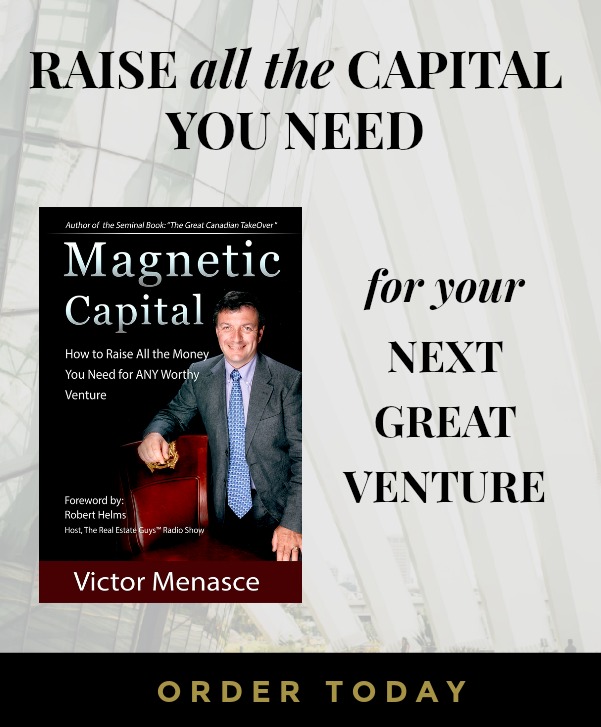
Number two, the importance of alignment. I actually talk about this in my book, Magnetic Capital. It’s about partner selection. And this is where a lot of real estate investors get into trouble. There’s a natural tendency to chase the highest valuation or the cheapest capital. But the author makes it clear: these are often the wrong criteria.
What matters more is alignment: alignment on risk, on time horizon, and on decision-making. Because once you’re in the deal, misalignment becomes friction, and friction destroys value. We see it all the time in real estate ventures.
One partner wants to refinance and hold, the other one wants to sell. One wants to push rents aggressively, the other one’s more conservative. Those differences don’t show up on the spreadsheet, they show up in the outcome.
Number three, there’s governance and discipline. Another key concept private equity introduces: structure, boards, reporting, accountability. For a lot of entrepreneurs, that feels restrictive, but from an investor’s perspective, it’s where discipline comes from.
In real estate, we are seeing the same evolution. Small deals can be pretty informal. Decisions get made quickly, often by one person. But when you bring in institutional capital, everything changes. There’s much more formal reporting, there are investment committees, structured decision-making. It’s more work, but it also reduces risk and ultimately leads to more consistent outcomes.
Then we talk about the levers of value creation. The author breaks it down into three levers: there’s organic growth, margin expansion, and strategic acquisitions. That may sound familiar, and it should. That’s because that’s exactly what high-performing real estate investors do. They either raise the rents and improve the occupancy, they reduce operating costs, or they acquire additional assets in order to scale. Nothing particularly revolutionary here. The difference is in the execution.
One of the most powerful ideas in the book is the buy-and-build strategy. Private equity firms will acquire a platform company and then grow it through a series of smaller acquisitions. Sometimes these are called roll-ups. The goal isn’t just growth, it’s multiple expansion. A larger, more diversified asset commands a higher valuation at exit.
And in real estate, that shows up as a portfolio. Instead of owning one property, you build a collection: multiple apartment buildings, a portfolio of industrial assets, a series of storage facilities. Individually, each asset might be ordinary, but together they become institutional quality. Institutional assets trade at higher multiples, and that’s where the real value is created.
Now, let’s be fair, the book is not perfect. It’s written from the perspective of an operator working inside a private equity firm, not from the outside looking in. It doesn’t spend much time on the risks, on over-leverage, or some of the short-term decision-making that, frankly, makes private equity difficult to work with at times. And it doesn’t spend much time on the pressure to exit on a specific timeline, whether that suits the business or not. Those are real issues.
But then again, that’s not the focus of the book. The goal is to help you understand the system and operate effectively within it.
So what are the practical takeaways? You want to be thinking in terms of time-adjusted returns. You want to build systems, not just deals, and you want to focus on scale.
So The Private Equity Playbook is exactly that: it’s a playbook. It gives you a clear framework of how private equity actually works, how the capital flows, how the deals are structured, and how the value is created at scale. Whether you’re aware of it or not, private equity is already shaping your market. They’re buying assets, they’re setting pricing, and they’re increasingly your competition. Understanding how they think, how they operate, is no longer optional. It is a competitive advantage.
As you think about that, go get a copy of The Private Equity Playbook and have an awesome rest of your day. Go make some great things happen. We’ll talk to you again tomorrow.
Stay connected and discover more about my work in real estate and by visiting and following me on various platforms:
Real Estate Espresso Podcast:
- 🎧 Spotify: The Real Estate Espresso Podcast
- 🌐 Website: www.victorjm.com
- 💼 LinkedIn: Victor Menasce
- 📺 YouTube: The Real Estate Espresso Podcast
- 📘 Facebook: www.facebook.com/realestateespresso
- 📧 Email: podcast@victorjm.com
Y Street Capital:
- 🌐 Website: www.ystreetcapital.com
- 📘 Facebook: www.facebook.com/YStreetCapital
- 📸 Instagram: @ystreetcapital