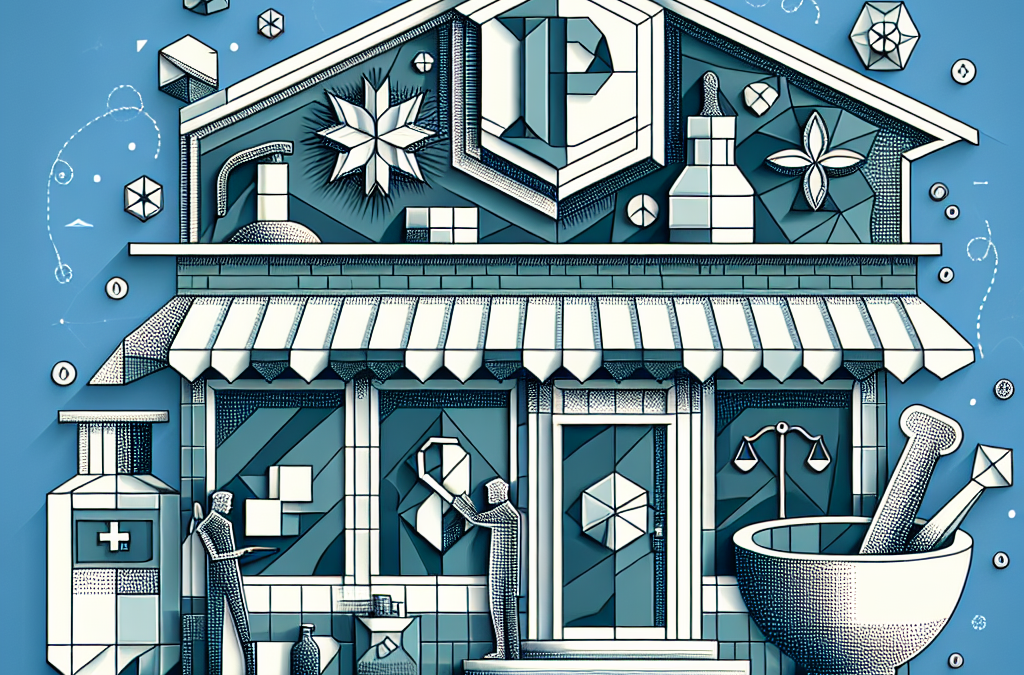
The Corner Pharmacy Is Gone
Welcome to The Real Estate Espresso Podcast, your morning shot at what’s new in the world of real estate investing. I’m your host, Victor Menasce. Today, we’re talking about one of the significant shifts that’s happening right now in retail real estate. It’s the mass closing of America’s corner drug stores, and it’s a very real opportunity hiding inside that disruption.
If you’ve driven through any American city or suburb lately, chances are you’ve noticed a vacant Walgreens or a CVS, or a boarded-up Rite Aid. These are not isolated closures. This is a structural, sector-wide contraction that is reshaping the retail landscape in ways that we haven’t seen before.
Here’s the scale of what’s happened. Walgreens closed 1,200 over the last three years. CVS has shuttered more than 1,170 stores since 2022. And Rite Aid, a 63-year-old chain that once operated 2,400 stores, went through bankruptcy twice and closed its last location in late 2025. It’s completely gone. In total, nearly 7,000 pharmacies across the country have closed since 2022. One in three pharmacies that existed in 2010 no longer exist today. Nearly 50 million Americans now live in what many people are calling a pharmacy desert.
So why did this happen? A few forces converged at the same time. Prescription reimbursement rates have been falling for years, squeezing margins at the core of the business model.
These closures are also a very big deal for real estate investors. These are not just any buildings that are sitting empty. They are freestanding single-story structures of anywhere from 10,000 to 15,000 square feet sitting on what the industry calls “main and main” positions. These are corner lots at the intersection of major arterial or collector roads. They’ve got dedicated parking. Many of them have drive-through lanes. And if they do, they are approved for a drive-through lane as part of their entitlement. That’s valuable.
These locations can be repurposed as restaurants with a drive-through lane. They have excellent visibility from multiple traffic directions. Pharmacies specifically engineered their real estate strategy around being the most accessible high-traffic corner in every community that they entered. But the business model failed. The real estate didn’t.
So, what does the industry say to do with them? The answer that generates the most enthusiasm right now is what commercial real estate are calling med-tail, medical retail. These locations make sense for urgent care clinics, dental chains, dialysis centers, behavioral health practices, senior care facilities. The community already associates these corners with health services. Patients need accessible parking and easy in-and-out access. These sites offer that by design. Patients are also distributed through those suburban and rural markets where healthcare access gaps are the most severe.
IHA, one of Michigan’s largest multi-specialty medical groups, has already converted several former Walgreens into outpatient medical facilities. In Ohio, several former Rite Aids are now senior care centers. Healthcare and wellness tenants now account for nearly 8% of all leased retail space in the US. That number’s only going to grow.
Now, that’s only one aspiration play. The fastest-moving backfill tenants have actually been dollar stores. Dollar Tree has taken over more than 300 former Walgreens locations. Dollar General, Family Dollar, Five Below, they’re all moving aggressively into these shells. The 10,000 to 15,000 square foot footprint is ideal for that format store. The infrastructure is already in place and they can open quickly.
Now, there’s nothing wrong with that as a real estate outcome. But the communities that lose a pharmacy and gain a dollar store are not necessarily getting a like-for-like replacement in terms of their public health value.
A third strategy gaining traction is multi-tenant subdivision. Some of the more creative developers are slicing these buildings into two, three, or sometimes even five storefronts. A developer in Rochester, New York, recently converted a former Walgreens into a five-tenant center anchored by Panera Bread and Chipotle. The drive-through lane becomes an enormous asset in that scenario. Quick-service restaurants and coffee concepts will pay a premium rent for those that have existing drive-through infrastructure. They don’t have to build it from scratch. There are many Chick-fil-A, Wingstop, McDonald’s that have moved into these high-traffic corner lots.
In the highest-value urban and suburban markets, the play is to tear down the building entirely. The land underneath the prime corner in the dense metro area is worth a lot more than a single-story box sitting on it. In numerous locations in Minnesota, Virginia, Connecticut, they all have active redevelopment proposals on former pharmacy sites. Many are mixed-use. Some have multi-family above retail. The corner gets its highest and best use after all.
Here’s the takeaway. When a major retail category collapses, the underlying real estate doesn’t disappear. It just needs a new story. It needs a new highest and best use. The best investors are the ones who identify that story before everyone else. The corner drug store era is ending. The question is, what comes next?
As you think about that, have an awesome rest of your day. Go make some great things happen and we’ll talk to you again tomorrow.
Stay connected and discover more about my work in real estate and by visiting and following me on various platforms:
Real Estate Espresso Podcast:
- 🎧 Spotify: The Real Estate Espresso Podcast
- 🌐 Website: www.victorjm.com
- 💼 LinkedIn: Victor Menasce
- 📺 YouTube: The Real Estate Espresso Podcast
- 📘 Facebook: www.facebook.com/realestateespresso
- 📧 Email: podcast@victorjm.com
Y Street Capital:
- 🌐 Website: www.ystreetcapital.com
- 📘 Facebook: www.facebook.com/YStreetCapital
- 📸 Instagram: @ystreetcapital