
Training Your Employees Faster Than Ever
Welcome to the Real Estate Espresso podcast, your morning shot of what’s new in the world of real estate investing. I’m your host, Victor Menasce.
On today’s show, we’re talking about accelerating AI training by orders of magnitude and the impact that this can have on the global arms race for the best artificial intelligence.
The key to learning fast is intensity. If you follow the human paradigm, the key to learning is practice and repetition across a wide range of conditions.
The problem is that humans learn very slowly if you really think about it. Think about the experience required to become an expert at driving a car. The vast majority of miles driven are completely uneventful, and they contribute next to zero in terms of driving experience. The same boring freeway, driving mile after mile, doesn’t make you a better driver.
When you do improve, it’s the result of those exception conditions. It’s when a cyclist comes into your lane without checking over their shoulder. It’s when the driver opens a door in a parked vehicle and you need to swerve to avoid hitting them. But still, these events are relatively infrequent.
The way to accelerate the learning process is the same way that pilots train. They use a simulator. The simulator can artificially generate exception events that in reality are very rare and difficult to recreate in the real world. Whether it’s an engine failure, a hydraulic failure, a fire, an avionics failure, a frozen pitot tube, ice buildup on the wings – there are so many cases a pilot needs to train on repetitively to handle in real-world situations when they occur.
If we’re serious about really training people how to drive a car, then we would put them through the same training as pilots. Driving school would consist of learning how to pull out of a spin on ice, how to avoid getting cut off by a big truck. Practice and repetition would be part of the driving school so that you would react to any traffic situation with the same skill of a Formula 1 driver like Mario Andretti. But then the cost of driver training would be many times more than it is today.
Let’s take that same thought process and look at how AI can learn. It’s really the same as an individual, with the exception of the fact that an individual only learns through their own experience. AI learns with the collective experience of all of the drivers connected to the training system. But still, when you rely on real-world data, the exception events are still very infrequent and the training is relatively slow.
What if you could put together a simulation of traffic conditions, same as your simulator, using AI to artificially generate those test cases? You could rapidly develop test cases of cars coming into your lane from every conceivable angle at all different kinds of speeds. No more wasting time analyzing use cases stuck on the Long Island Expressway where I go 10 mph. Expert training involves intensity of those less frequent edge cases.
My observation of the Tesla taxis in Austin is they seem to have trouble knowing what to do in the presence of emergency vehicles like police, fire, and ambulance under a variety of different circumstances. Now, these situations don’t happen that frequently, and so the training data just doesn’t exist in abundance. To properly train a driver or an AI requires exposure to these cases in abundance.
So why am I telling you this? After all, this is a real estate investing podcast, not an automotive AI podcast. The principles of training an AI, they’re all the same. It doesn’t matter whether we’re talking about flight school or driving school, or real estate. If you want to create your own custom AI, you need to train it.
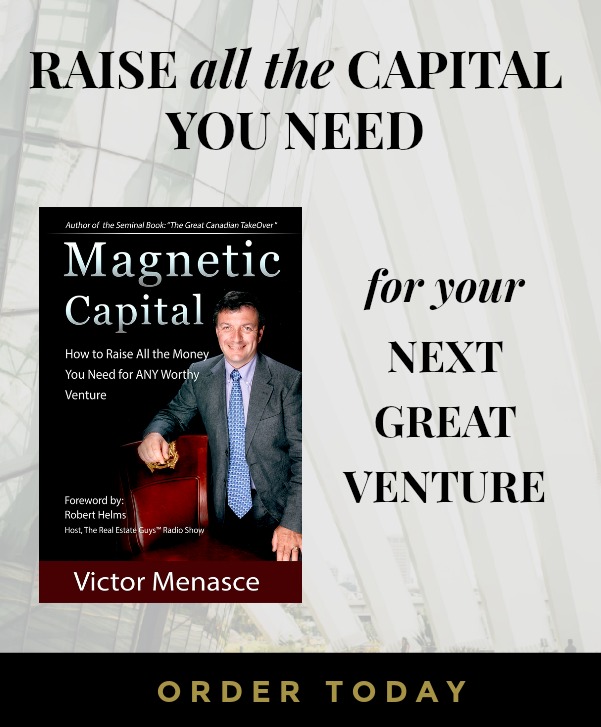
So far, we’ve trained Victor AI with the contents of the Real Estate Espresso podcast and my book Magnetic Capital. What if we wanted to make Victor AI truly world class? What would it take?
Our company only has a handful of projects underway. It’s still a lot, but small compared with the universe of projects out there. The amount of training data that we can provide to Victor AI, if we’re just relying on our own use cases, is fairly limited.
What if we could train Victor AI to respond intelligently to a series of simulated use cases? Those cases don’t have to be real in order to serve a useful training purpose. This is the same logic that goes into a flight simulator. You don’t need to have a real engine failure to train a pilot on how to handle an engine failure, as long as the simulation you create is realistic enough to take the pilot through the checklist sequence.
If you’re a user of artificial intelligence, you’re probably thinking about whether the tool is giving you good results or not. If the results are less than you would naturally accept, the natural reaction is to abandon the use of AI for that particular function. But what if you could train the AI with a minimum amount of effort?
A well-crafted prompt to generate a series of simulation use cases could change the quality of the output, not just for your single query, but forever. The simulation use cases, anytime you train an AI, you’re improving it forever.
That change in mindset results in two distinct changes. It results, number one, in the acceleration of the knowledge base for a fraction of the cost of normal training, because the training is orders of magnitude more concentrated. And then, number two, you start to think of AI as an employee that you need to invest in, not just a digital employee that you exploit when it suits your fancy.
As you think about that, have an awesome rest of your day. Go make some great things happen and we’ll talk again tomorrow.
Stay connected and discover more about my work in real estate and by visiting and following me on various platforms:
Real Estate Espresso Podcast:
- 🎧 Spotify: The Real Estate Espresso Podcast
- 🌐 Website: www.victorjm.com
- 💼 LinkedIn: Victor Menasce
- 📺 YouTube: The Real Estate Espresso Podcast
- 📘 Facebook: www.facebook.com/realestateespresso
- 📧 Email: podcast@victorjm.com
Y Street Capital:
- 🌐 Website: www.ystreetcapital.com
- 📘 Facebook: www.facebook.com/YStreetCapital
- 📸 Instagram: @ystreetcapital