
What Housing Crisis?
Welcome to the Real Estate Espresso Podcast, your morning shot of what’s new in the world of real estate investing. I’m your host, Victor Menasce.
On today’s show, we’re talking about the myth of the housing crisis.
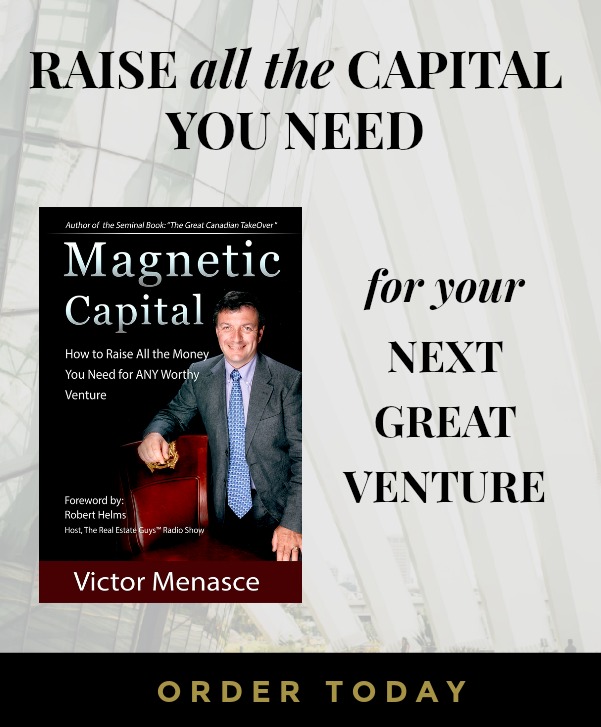
But first, I’d like to invite you to a webinar on December 16th, where I’ll be demonstrating the use of our new AI tool, which we are affectionately calling Victor AI. This is our own custom language model built on top of ChatGPT. We trained Victor AI with the contents of the Real Estate Espresso Podcast and my book, Magnetic Capital. It’s the difference between going to a family doctor versus going to a specialist. The specialist is always going to give you a more precise and more detailed answer.
Click on the link in the show notes and we’ll talk to you on December 16th, 2 p.m. We’ll have the opportunity to interact with a live demonstration.
On today’s show, we’re talking about how free markets respond to the housing crisis. We should be grateful that housing is privately held in the U.S. Government housing experiments have been attempted all over the world. These have been resounding failures almost regardless of the location.
I visited mainland China and observed firsthand what communist-era housing was like. I also visited Ukraine before the war broke out and observed what Soviet-era housing was like there too. In both cases, the properties could be described as bare bones. These were concrete structures with leaky windows and zero interior finishes. Most people could not afford furnishings, and the properties were simply dreadful. I would not wish these accommodations on my worst enemy.
There is some substandard housing in the U.S. as well. Thankfully, that represents a small percentage of the market total. It’s often condemned when safety standards are not met. People with lower incomes can make good tenants. I’ve experienced both ends of the spectrum in Chicago and Philadelphia.
Yes, there’s a problem with affordability in the U.S., but affordability is not limited to housing – it is broadly based. Devaluation has impacted virtually all aspects of daily life. The problem is that the U.S. dollar has been devalued, and that incomes have not kept pace with the devaluation of the currency. It’s not a problem of greedy landlords jacking up the rent above what ordinary people can afford.
When landlords price their properties above market, they experience extended vacancy. And a vacant property is a money-losing property. It will eventually result in bankruptcy for the landlord. Rents rise during periods of acute demand and short supply. We saw this during the pandemic.
Since then, we’ve seen a significant supply enter many markets, and that’s resulted in falling rents and a lot of rent concessions. We talked about it late last week.
The Wall Street Journal published a story today which showed a petri dish in Minneapolis and Saint Paul. The Twin Cities form part of a single metro area, but vastly different political approaches to housing show the impacts of each approach in clear and unambiguous terms.
In 2022, the city of St. Paul implemented rent controls and policies that sound very similar to those of the recently elected Mayor Zoran Mamdani in New York City. This was one of the strictest rent control regimes in the country. The ordinance capped annual rent increases at three percent for most apartments, even empty ones, and it didn’t adjust for inflation.
Now the results are coming into focus. Permits to build apartments in St. Paul plummeted by 79 percent in early 2022 from a year before. Real estate investment basically froze. Developers halted new projects and lenders pulled back. Property values declined as investment evaporated. All of this compounded the existing real estate problems brought on during the pandemic.
St. Paul officials are now walking back parts of the ordinance, voting in May of this year to exempt new construction and properties built after 2004.
The city of Minneapolis took the opposite approach and created conditions that encouraged new supply to enter the market. So in Minneapolis, developers kept building. Housing permits surged nearly four-fold in early 2022 from the year before. The downtown blossomed as new apartments hit the market and attracted young professionals.
During the pandemic, rents grew more slowly in Minneapolis than they did in the neighboring city of St. Paul. From 2022 to 2024, Minneapolis rents rose 0.7% on average, whereas St. Paul’s rents rose 1.8% during that same time period.
Landlords in that market poured in, keeping rents lower with existing tenants and then adjusting rents to market rent when tenants vacate. That’s a nice way to treat your tenants if you can do it.
As I reported late last week, most major markets in the U.S. have experienced significant increases in supply. It’s those local governments that have tried to suppress rents that have suffered the most. There are clear shortages which are driving up prices, and at the same time, there’s a surplus of homes and apartments.
The crisis is one of affordability, but it’s not a real estate issue alone. The crisis of affordability is the result of inflation having devalued the currency. It’s eroded the purchasing power for ordinary citizens across the board. It’s reflected in record levels of student debt, crushing levels of consumer debt, falling levels of homeownership, rising levels of automotive debt, and it’s affected the ability to afford basic groceries.
A solution is not rent control, any more than price controls at the grocery store will make it more affordable for people to eat. We’ve had a succession of governments on both sides of the political spectrum who have been using devaluation of the currency as a way to fund excess government spending. Ordinary citizens need to start calling it out for exactly what it is.
As you think about that, have an awesome rest of your day. Go make some great things happen, and we’ll talk to you again tomorrow.
Stay connected and discover more about my work in real estate and by visiting and following me on various platforms:
Real Estate Espresso Podcast:
- 🎧 Spotify: The Real Estate Espresso Podcast
- 🌐 Website: www.victorjm.com
- 💼 LinkedIn: Victor Menasce
- 📺 YouTube: The Real Estate Espresso Podcast
- 📘 Facebook: www.facebook.com/realestateespresso
- 📧 Email: podcast@victorjm.com
Y Street Capital:
- 🌐 Website: www.ystreetcapital.com
- 📘 Facebook: www.facebook.com/YStreetCapital
- 📸 Instagram: @ystreetcapital