
The New Fed Could Be The Old Fed
Welcome to the Real Estate Espresso Podcast, your morning shot at what’s new in the world of real estate investing. I’m your host, Victor Menasce.
On today’s show, we’re talking about what is happening at the Federal Reserve. I’m going to share a perspective that’s different from what you might be hearing in the mainstream media.
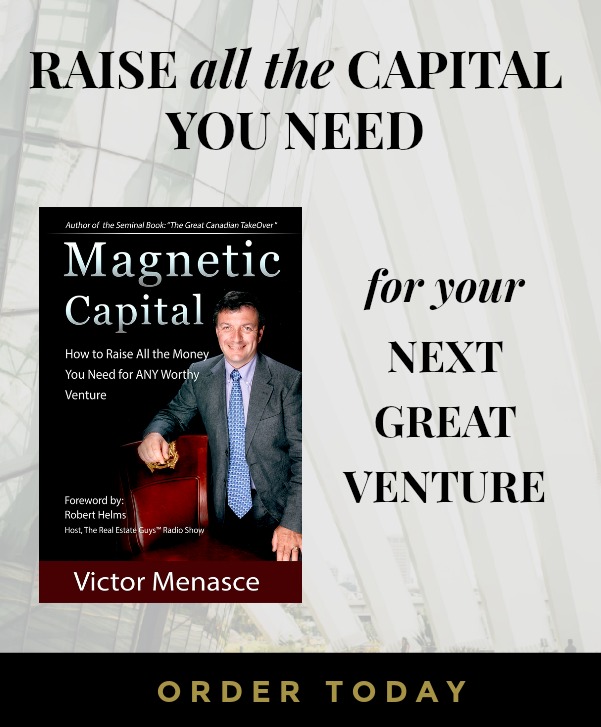
But first, I’d like to invite you to a webinar next week on December 16, 2 p.m. Eastern Time. I’ll be demonstrating the use of our new AI tool, which we’re affectionately calling Victor AI. This is our own custom language model. It’s built on top of ChatGPT. We trained Victor AI with the contents of the Real Estate Espresso Podcast, nearly 3,000 episodes, and my book, Magnetic Capital. It’s the difference between going to a family doctor versus going to a specialist. A specialist is always going to give you a more detailed, more precise answer. Click on the link in the show notes and we’ll talk to you on December 16th.
On today’s show, we’re talking about what’s happening at the Fed. The Fed met this week and announced another quarter-point cut in interest rates, and at the same time they signaled they’re probably done cutting for now. Now, let me remind you that Fed Chair Jerome Powell said the same thing six weeks ago at the October meeting.
This time, there was dissent on both sides, with two committee members voting to hold rates constant, and Steven Mirren, the President’s new appointee, pushing for a half percentage point cut. Wednesday’s decision leaves the Fed funds rate at a range of between 3.5 and 3.75 percent.
Now, the more telling part of the news conference had to do with the Fed’s balance sheet. The Fed has been tapering its balance sheet for much of the past couple of years. They were allowing securities that were maturing to run off by market at large, and not repurchases by the Fed. November was the last month of quantitative tightening. At this week’s meeting, the Fed took the decision to reverse direction and start buying securities again.
Last week, we saw a spike in banks accessing the Fed’s emergency funding facilities, whereas historically borrowing has been near zero, and it jumped to $13 billion per day at the bank’s restricted discount window. That’s a huge change. Historically, that’s not the worst it’s been. It was certainly much worse during the pandemic and during the Great Financial Crisis, but it is a big jump, and it is a signal that there’s trouble lurking beneath the waves.
The central bank intends to start buying $40 billion per month in securities from its member institutions. These will be short-term U.S. Treasuries. The goal is to provide additional reserves for member banks to draw upon if additional liquidity is needed. The secured overnight funds rate, which is a benchmark for most short-term financing, was pegged at 4.12 at the end of November, and today it’s tracking at 3.92. That means that for developers who have construction projects, the cost of capital continues to fall in the second half of this year.
The big news is not what happened in the Fed meeting today. It’s what happened outside the meeting in the form of an open letter from former Fed insider Danielle DiMartino Booth. She was at the Federal Reserve Bank of Dallas for ten years as advisor to President Fisher.
This open letter spells out the provisions of the Federal Reserve Act, which have, up until now, never been used. Following the provisions of the Federal Reserve Act would in fact break with tradition, but it would be fully legal. According to the rules, each year in January the 19 members of the Federal Open Market Committee elect the chair for the next year. Now, traditionally the chair has been appointed by the President and confirmed by the Senate, but there’s no requirement for the Committee to pay attention to the wishes of the President. They could elect the chair from existing members, and theoretically Jerome Powell would not be required to vacate a seat on the FOMC. He could technically step down as chair and stay on as a Committee member until 2028. That would not leave an opening for the President to propose a new member of his choosing. The move would in fact be completely legal.
In fact, it would require an Act of Congress to change the Federal Reserve Act before the end of January to give the President the authority to override the Committee’s vote. Again, this has never been done before, but given the testy exchange between the White House and the Fed in the past year, such a move could be within the realm of possibility.
The Fed is supposed to be apolitical and serve strictly its mandate outlined in the Federal Reserve Act. But there are clear signs of political bias in the way the FOMC members are voting. For example, Chicago Fed President Austan Goolsbee has traditionally been among the most dovish of Fed members. He’s been consistently arguing for lower interest rates. But if he voted for lower rates, then he would be seen as agreeing with the President, who is also advocating for lower interest rates. At this meeting, Goolsbee was one of the dissenting votes who argued in favor of keeping rates higher.
Many Fed watchers see this vote as a vote of defiance against the President, as opposed to being a true reflection of his belief in monetary policy. This is where it’s starting to become political. We might see a new Fed in January in that the Fed themselves might elect a new chair from within their ranks and insulate themselves from the White House. This would be unprecedented. But then again, we’ve seen a lot of unprecedented initiatives from this White House.
If the Fed asserts its independence in this way, it could have the benefit of maintaining its political independence and put a stop to the contrarian positions that you’re currently seeing from certain Committee members. I predict the chorus of advocates for this approach will get louder in the coming weeks, something to pay close attention to as you think about that.
Have an awesome rest of your day. Go make some great things happen. And we’ll talk to you again tomorrow.
Stay connected and discover more about my work in real estate by visiting and following me on various platforms:
Real Estate Espresso Podcast:
- 🎧 Spotify: The Real Estate Espresso Podcast
- 🌐 Website: www.victorjm.com
- 💼 LinkedIn: Victor Menasce
- 📺 YouTube: The Real Estate Espresso Podcast
- 📘 Facebook: www.facebook.com/realestateespresso
- 📧 Email: podcast@victorjm.com
Y Street Capital:
- 🌐 Website: www.ystreetcapital.com
- 📘 Facebook: www.facebook.com/YStreetCapital
- 📸 Instagram: @ystreetcapital