
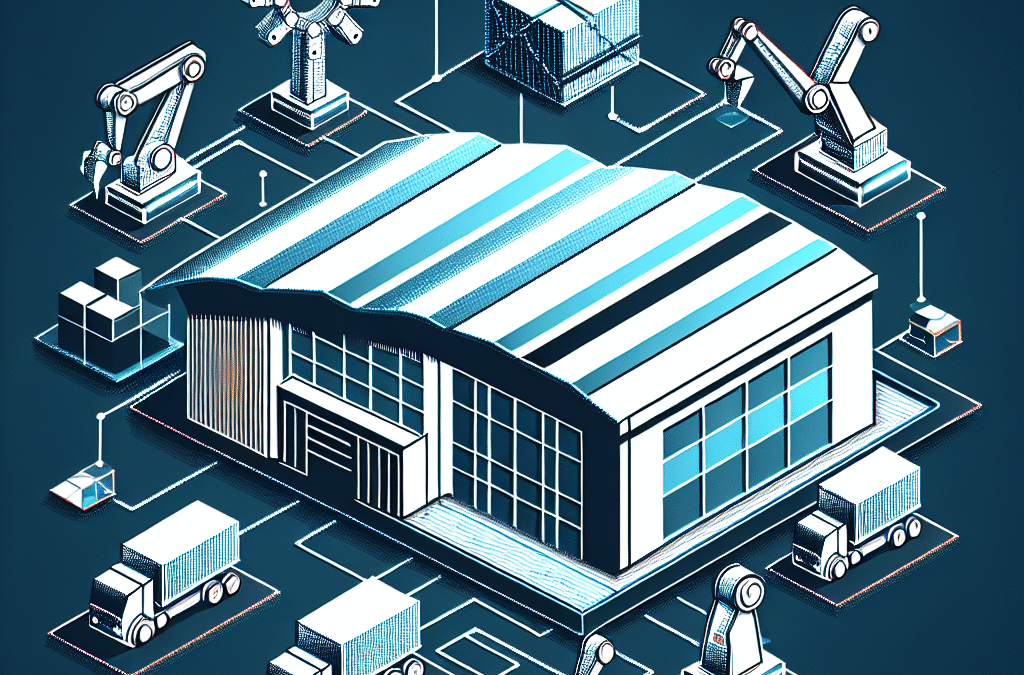
Has AI Made Some Warehouses Obsolete?
Welcome to The Real Estate Espresso podcast. Your morning shot of what’s new in the world of real estate investing. I’m your host, Victor Menasce. On today’s show, we’re talking about how AI is continually making headlines on a daily basis. However, since this is a real estate podcast and not an AI podcast, we need to assess the impact of AI on real estate. In today’s show, we’re examining whether AI is fundamentally going to change the design of industrial warehouses, and perhaps, render some existing warehouses functionally obsolete.
The introduction of robotics has profoundly altered the design of industrial buildings. The shift from layouts optimized for human movement to a new paradigm focusing on efficiency, density, and data-driven automation is driven by the capabilities of different types of robots. These changes lead to significant alterations in space utilization, infrastructure, and overall workflow.
With a focus on reducing aisle size and increasing density, robots, particularly those used in automated storage and retrieval systems, can navigate much tighter spaces than traditional human-operated forklift trucks. It significantly increases storage capacity and product density within the same footprint.
The robotic systems and stacker cranes are being built taller and taller with each passing year. Vertical expansion maximizes storage space without necessarily increasing the building’s ground area. However, it necessitates design changes to the roof structure, column spacing, and floor in order to support the additional height and weight.
If a legacy building has fixed column spacing, it determines the pitch of the racking system and the width of the drive aisles. As a result, a width or dimension that doesn’t work optimally translates directly into a loss of efficiency and value on the property.
Thanks to their flexibility, modern robots that use sensors and computer vision to navigate dynamically can make warehouses more adaptable. Warehouses can thus be reconfigured more easily to accommodate changing inventory needs, seasonal demands, or any major infrastructure changes.
In addition, automated warehouses are often designed with clearly marked zones for different activities, such as shipping, receiving, picking, packing, and so on. These zones are tailored to the specific robots and automation systems associated with each specific function.
The workflow in these buildings has changed dramatically. Many robotic systems adopt a goods-to-person model whereby robots retrieve items and bring them to a stationary human worker. This eliminates the need for workers to walk long distances, freeing them up for more complex tasks and significantly improving picking rates.
When it comes to troubleshooting, the role of the human in a robotic warehouse shifts from manual labor to supervision and oversight. This shift requires a new approach to the layout, which priotises control rooms and observation platforms.
Considering these changes, an older warehouse might need so many functional changes to adapt to this new landscape that it may become functionally obsolete. So think about that, have an awesome rest of your day. Go make some great things happen. We’ll talk again tomorrow.
Stay connected and discover more about my work in real estate by visiting and following me on various platforms:
Real Estate Espresso Podcast:
- 🎧 Spotify: The Real Estate Espresso Podcast
- 🌐 Website: www.victorjm.com
- 💼 LinkedIn: Victor Menasce
- 📺 YouTube: The Real Estate Espresso Podcast
- 📘 Facebook: www.facebook.com/realestateespresso
- 📧 Email: podcast@victorjm.com
Y Street Capital:
- 🌐 Website: www.ystreetcapital.com
- 📘 Facebook: www.facebook.com/YStreetCapital
- 📸 Instagram: @ystreetcapital